
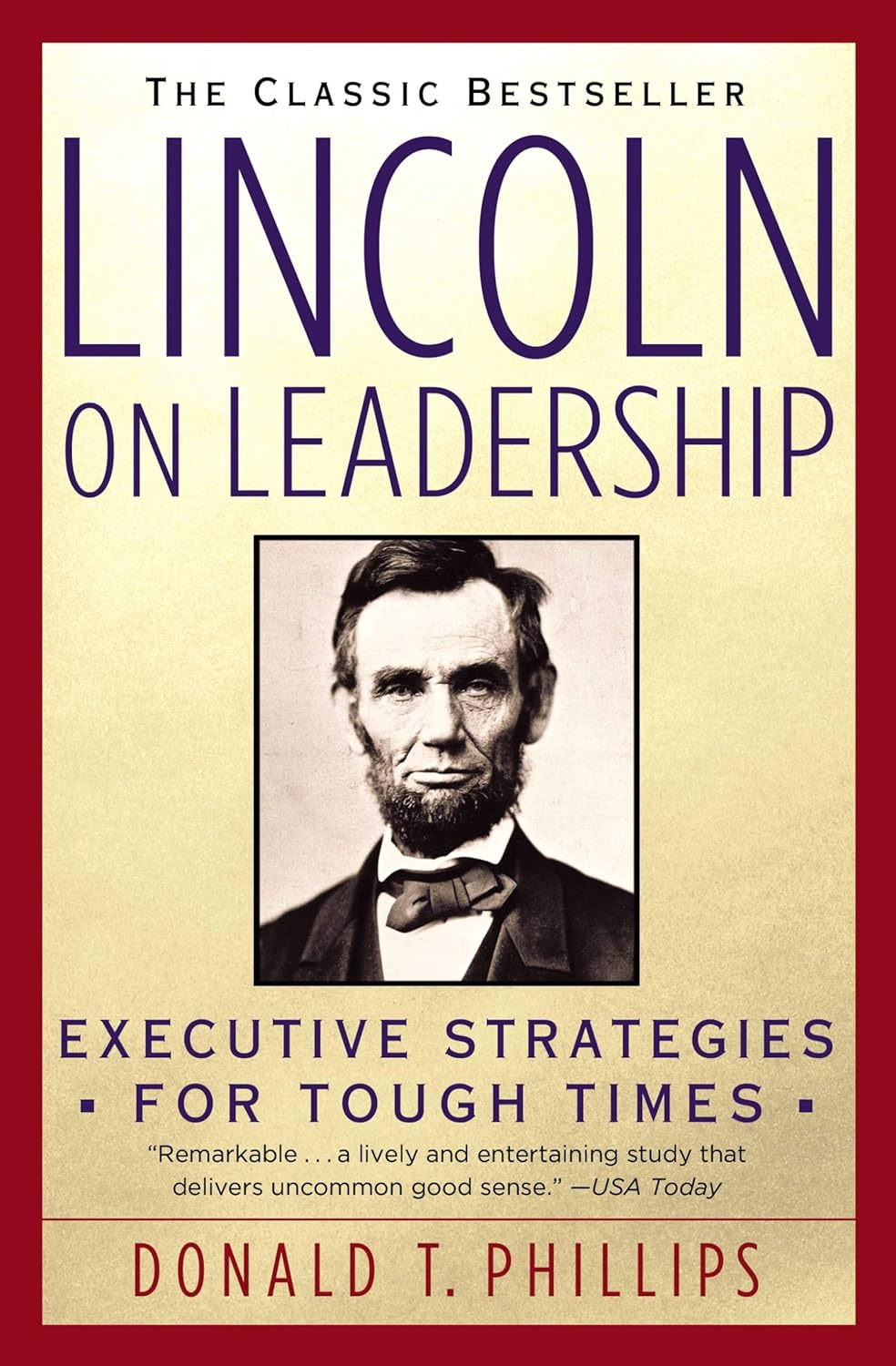
Lincoln on Leadership: Executive Strategies for Tough Times
- ISBN-10: 0446394599
- ISBN-13: 978-0446394598
- Publication Year: 1993
- Pages: 188
Review
Introduction: I came across this book while recently re-visiting Springfield, where I spent time exploring three historic Lincoln sites: the Abraham Lincoln Presidential Library and Museum (easily one of the best museums I’ve visited), the Lincoln Home National Historic Site, and the Lincoln Tomb.
Standing in those spaces, it’s hard not to reflect on the path of Abraham Lincoln—a man who came from humble beginnings, largely educated himself, faced repeated setbacks, and still rose to lead the country through one of its most difficult periods.
That context made this book feel less like just another leadership read and more like a practical look into how someone like Lincoln actually led. Different time, different scale—but many of the challenges of leading people, building alignment, and staying focused on results felt very familiar.
Inspiration Summary: This isn’t a history book—it’s a breakdown of how Lincoln led during one of the most difficult periods in American history. The core message is simple: leadership isn’t about position, it’s about clarity, communication, and execution.
Lincoln led with intention. He communicated constantly, set clear goals, and reinforced his vision over and over again. He understood that people don’t just “get it” once—you have to keep showing them, telling them, and aligning them.
At its core, the book is about disciplined leadership in the face of pressure—staying focused on what matters, even when everything around you is pulling you in different directions.
Personal Connection: Several parts of this book hit home for me, especially given the past year in my business.
The idea of being results-oriented stood out immediately. The author describes Lincoln’s drive to achieve as almost an obsession—and I had to laugh a little at that, because I can relate. When I lock onto a goal, I don’t let go easily. That level of focus has been a major factor in both building and rebuilding.
The emphasis on communication also resonated. Public speaking is something I actively work on and teach to my instructors. Watching younger leaders struggle with nervous energy, rambling, or lack of clarity—it reinforces just how critical communication is. You can’t lead if people don’t understand you.
And then there’s vision.
“Transforming Lives” is simple. It’s clear. It’s something I believe in fully. But what this book reinforced is that not everyone will align with that vision—and that’s not something you can ignore. Misalignment doesn’t fix itself. It has to be addressed.
Looking back, the principles in this book—communication, results, and vision—are the same ones that helped me stabilize and move forward when things got difficult.
Actionable Insights
1. Leadership Requires Clear, Confident Communication
Lincoln was known for his ability to communicate in a way people understood. Not overly complex—clear and direct.
This is something I’m continuing to refine in myself and develop in my team. Whether it’s teaching a class, speaking to parents, or leading instructors, clarity matters. Rambling, filler words, and nervous habits dilute leadership.
If you want to lead, you have to be understood.
2. Be Relentlessly Results-Oriented
Lincoln didn’t just “hope” things would work—he expected results.
That mindset shift is important. Goals aren’t suggestions—they’re commitments. The idea that his drive to achieve was almost an obsession stood out to me, because I’ve experienced that same level of focus in my own work.
Progress doesn’t happen casually. It happens when you decide that the outcome matters.
3. Cast a Vision—and Reinforce It Constantly
One of the biggest takeaways: you don’t say the vision once—you say it over and over again.
For me, that vision is simple: Transforming Lives.
But this book reinforced something important—clarity of vision also means clarity of alignment. Not everyone will share that vision, and if they don’t, it creates friction in the organization.
Strong leadership means reinforcing the vision consistently—and making sure the people around you are aligned with it.
Conclusion: This book was a solid reminder that leadership fundamentals don’t change—regardless of time period or scale.
Communicate clearly. Stay focused on results. Reinforce the vision.
Simple in theory, but not always easy in practice.
It’s also a very easy read, which makes it approachable whether you’re deep into leadership development or just getting started.
If you’re leading a team, building something, or working through challenges, this is worth the read—not for inspiration alone, but for practical reinforcement of what strong leadership actually looks like.